Blue Mountain Craighton Estate Coffee Tasting Tour / Devon House
PrivateTransport includedAir-conditioned
From $180 per person
There is no single Blue Mountain estate. The name covers a growing area across four parishes and several thousand smallholdings. Only a handful of those open a gate to visitors, and this page names them: what each one is, and the rule that decides whether a plot counts at all.
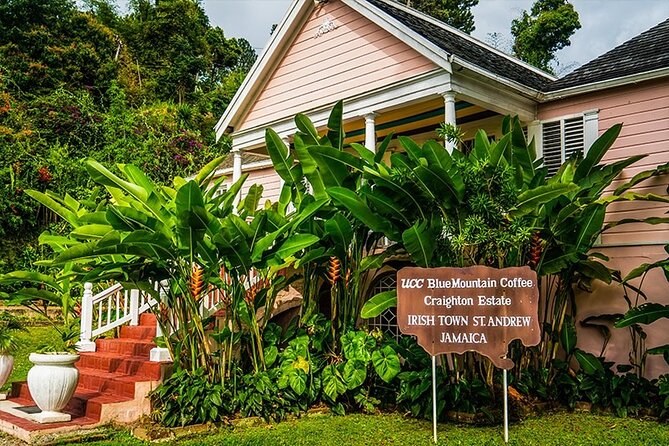
Craighton is the estate these itineraries name most often. It sits above the village of Irish Town in St Andrew, about an hour up from Kingston. Its own board at the gate reads UCC Blue Mountain Coffee, Craighton Estate, Irish Town, St Andrew, Jamaica.
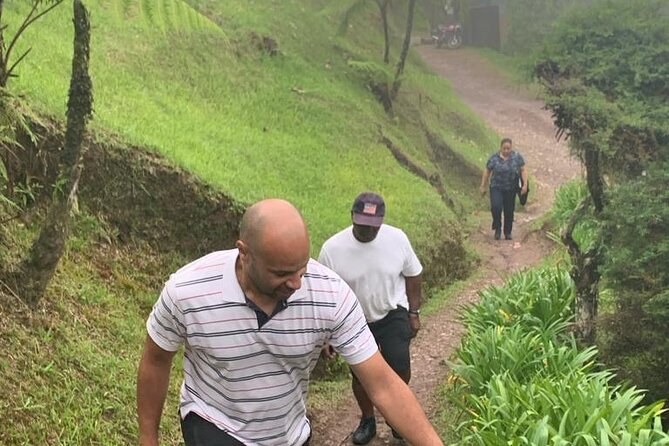
The owner is UCC, the Ueshima Coffee Company of Japan. It is one of the largest exporters of Jamaica Blue Mountain coffee to the country that buys most of the crop. The published visit is one hour, daily 8am to 4pm, US$25 for adults and US$15 for children aged 6 to 12, with lower rates for residents. You walk the working farm and the great house, and it ends on a cup.
Some of the tours here go to Craighton by name, and one states that the entrance fee sits inside the fare. That is worth checking before you pay it twice.
Mavis Bank sits in the next valley east, higher and deeper into the range. It is where a great deal of the region's crop actually ends up. The factory has run since 1923 and is the home of the Jablum label, processing over a million pounds of green beans a year from around 6,000 farmers.
Its own 45-minute visit runs Monday to Friday, 8:30am to noon and 1pm to 3:30pm, at US$8 for adults and US$3.50 for children. Reservations are recommended. No tour here includes it, so arrange this one directly if the processing side interests you. It is the one place on the mountain where you meet the scale rather than the smallholding.
Geography and altitude, decided in law rather than by the grower. The Coffee Industry Regulation Act names four parishes: St Andrew, St Thomas, Portland and St Mary. The Jamaica Tourist Board publishes the band as 3,000 to 5,500 feet. Inside those limits the crop may be certified as Jamaica Blue Mountain.
The line is not a marketing flourish. A farm at 3,100 feet and a farm at 2,900 feet on the same hillside, worked by the same family, sell into two markets at two prices. Certification is issued by JACRA, which took over the Coffee Industry Board's role on 1 January 2018.
The bands as published by the Jamaica Tourist Board, under the Coffee Industry Regulation Act's parish list.
| Designation | Where it grows | What it means for you |
|---|---|---|
| Jamaica Blue Mountain | 3,000–5,500 ft in St Andrew, St Thomas, Portland or St Mary | The certified name, and the price that comes with it |
| Jamaica High Mountain | 1,500–3,000 ft | Often the same families and the same varieties, lower down |
| Jamaica Supreme / Low Mountain | Below 1,500 ft | Sold under its own name and rarely exported |
| Above 5,500 ft | Forest reserve | Not planted — the ceiling is as real as the floor |
Mostly small farmers. Over 5,000 growers work plots across the region. Many of those plots are a few acres on a slope too steep for anything mechanised, and the work on them is done on foot.
Above them sit the processors and the exporters. Above those sits one dominant market: over 80 per cent of Jamaica's coffee is exported, and most of it goes to Japan. A bag is easier to find in Tokyo than in a Kingston supermarket. That is one good reason to buy at the gate on a Blue Mountain coffee plantation tour, while you are standing on the farm that grew it.
Several listings say "a coffee farm" or "the plantation" and leave it there. One traveller's own review names a farm at 4,800 feet that no listing mentions. That is normal here: operators work with the smallholdings they have relationships with, and the gate can change with the season and the road.
What does not change is the shape of the visit. A walk on a working slope, the processing yard, and a tasting. If standing on one named estate matters to you, book the tour that names it.
Published by each site. The tours listed below reach the first of the three; the other two are arranged directly.
| Place | What you see | Hours | Price |
|---|---|---|---|
| Craighton Estate, Irish Town | Working farm, great house, tasting | 8am–4pm daily | US$25 adult, US$15 child 6–12 |
| Mavis Bank factory | Pulping, drying, sorting, roasting | Mon–Fri, 8:30am–noon and 1–3:30pm | US$8 adult, US$3.50 child |
| Holywell, in the national park | The forest the coffee grows under | Daytime, ranger station | US$10 adult, US$5 child |
Some of these go to Craighton by name and one carries the gate fee inside the fare. The comparison table shows which, alongside hours, price and departure point.
What happens on the slope, from cherry to cup, is on the growing and processing page. What lands on the tasting table is on the tastings page. Every departure is listed on Blue Mountain Coffee Tours.
From $180 per person
From $90 per person