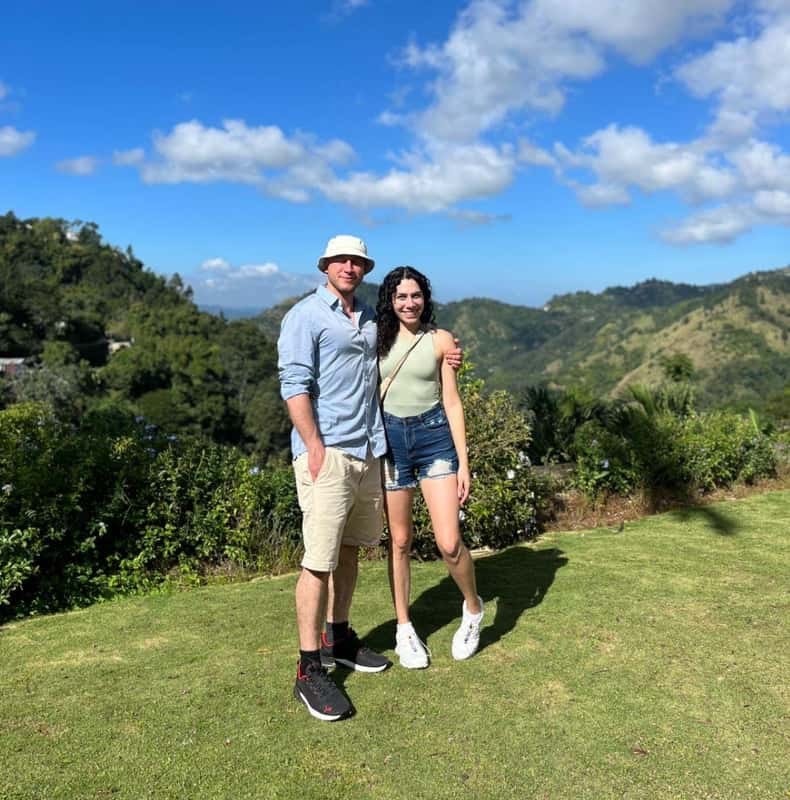
Kingston Blue Mountains Tour with Coffee Tasting
Hotel pickupFarm entryCoffee tasting
From $90 per person
A coffee tour here is one chain explained end to end, and the estates walk it in order. This is that chain: what happens at each stage, why it happens on this mountain the way it does, and what it means for the bag you take home.
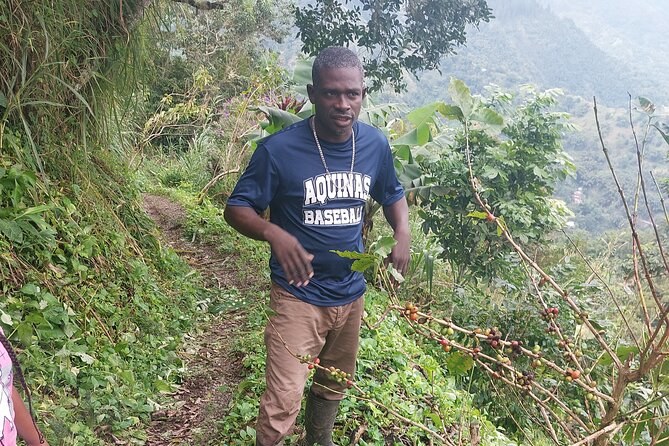
Coffee is a fruit. The tree carries clusters of cherries that turn from green through yellow to deep red, and inside each one sit two seeds facing each other. The first thing you notice on the walk is that one branch carries all three colours at once. That is why every cherry here is picked by hand.
Ripe cherries ferment fast, so the fruit is stripped off within hours of picking. A pulper squeezes the skin and flesh away. What is left is the seed in a sticky layer called mucilage, still wrapped in a papery husk. Miss the window and the whole day's picking sours.
The mucilage is removed by letting it break down in tanks, usually for somewhere between twelve and thirty-six hours. It is then washed off in clean water. This is the step that makes a washed coffee taste clean and bright rather than heavy, and it is why the processing sits beside running water.
The wet beans go out on raised platforms. The local word for them is barbecues. They are raked through the day so they dry evenly, then covered against the afternoon rain. The target is a moisture content of about eleven per cent, and hitting it on a mountain that clouds over daily is the hardest part of the whole process.
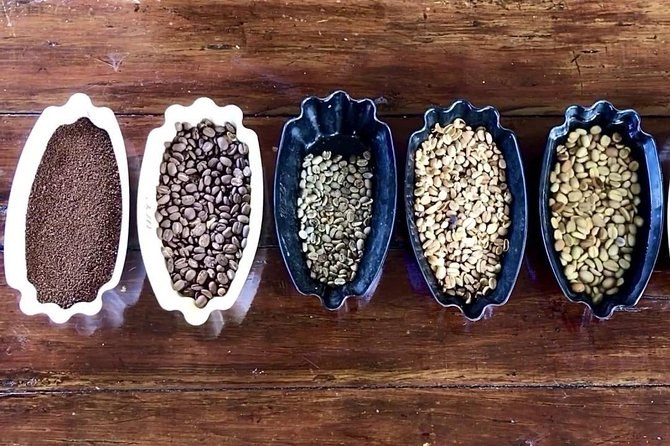
Once dry, the parchment husk is milled off and the green bean is sorted. First by size over a screen, then by density, then by colour, then by hand on a belt. Size is what the grade names refer to: the largest screens make Blue Mountain No. 1. Peaberry is set aside separately, because a peaberry is the single round seed you get when only one of the pair develops.
The one line worth memorising before you buy: a blend is not a grade.
| What it says on the bag | What it actually means |
|---|---|
| Jamaica Blue Mountain | Grown 3,000–5,500 ft in one of four parishes, and certified |
| Blue Mountain No. 1 | The largest screen size, sorted off the top |
| Peaberry | One round seed instead of two flat ones — separated, not graded higher |
| Jamaica High Mountain | Below 3,000 ft. A good coffee under a different name |
| Blue Mountain blend | Any proportion of the real thing. Read the percentage |
Almost all of the crop leaves Jamaica green and is roasted in the country that buys it. What you meet on an estate is a small drum roasting for the shop and the tasting. It is run by feel and by sound: the beans crack audibly as they expand, and the roaster is listening for it.
Cold slows fruit down. At 3,000 to 5,500 feet the nights are cool and the afternoons are under cloud, so the cherry takes far longer to ripen than the same variety near the coast. A longer ripening puts more sugar and more acid into a denser seed, and a denser seed behaves differently in the roaster.
That is the whole argument for the altitude rule. It is also why a Blue Mountain coffee plantation tour spends its time climbing rather than driving along. Kingston sits at sea level; the estates start 3,000 feet above it.
Certification is issued by JACRA, the Jamaica Agricultural Commodities Regulatory Authority. It absorbed the old Coffee Industry Board on 1 January 2018 and regulates coffee alongside cocoa, coconut and the spices. It licenses the farms, the processors and the exporters.
The name on the bag is therefore a certification mark rather than a description. At the shop counter that means one thing: the words are protected, so ask to see the certification if the price looks too good. The rest of what an estate visit shows you is on the farms page, and every tour is on Blue Mountain Coffee Tours.
From $90 per person
From $180 per person
From $190 per person