Kingston Blue Mountains Tour with Coffee Tasting
Hotel pickupFarm entryCoffee tasting
From $90 per person
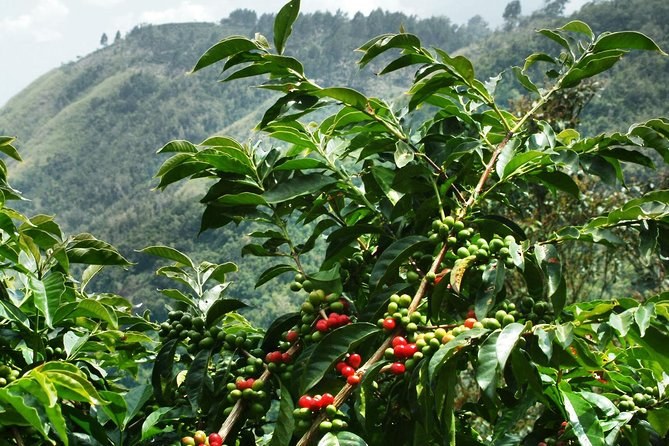
Nothing about this mountain closes for a season. What changes is what the trees are doing, and that changes a farm walk more than the weather does. This guide is the coffee year from the visitor's side: what is on the tree in each part of it, and which of those you would rather see.
Two calendars, running against each other. The crop calendar peaks between September and December, when the cherries are red and the yard is working. The weather calendar is at its best between December and April, when the mornings are clear and the view goes to the harbour.
They overlap in December, which is why December is both the prettiest month on the mountain and the busiest booking window of the year. Everything else is a trade.
Flowering follows the first proper rains. The trees put out dense white blossom that smells of jasmine and lasts a few days at a time, in waves rather than all at once.
It is the prettiest the farms look all year and almost nobody plans a trip around it. Kingston rainfall is at its lowest, the road is dry, and guides have time for you. If your dates fall in late February, ask the operator whether the trees are in flower — a local guide knows that to the week.
Each wave of blossom becomes a wave of cherry, so by April the slope is green and hard and quiet. The work is pruning, weeding and the endless business of keeping a steep hillside from washing away.
Nothing is missing from a tour in these months. The estate walk, the processing yard and the tasting all run year-round. What you lose is the theatre; what you gain is a farm that is not trying to get a crop off a hillside while you stand in the middle of it.
May is the first wet peak. Mornings usually stay clear and afternoons close in, which shifts every sensible booking earlier in the day.
July is the island's usual mid-season lull in the rain and, being the northern summer holiday, one of the busiest months for bookings. Book a week out rather than two days.
By late August the first red cherries appear on the lower farms, and the processing yard is being prepared. It is the turn of the year on the mountain, and it happens quietly.
This is the working season. Pickers take only the deep-red cherries and come back to the same tree a fortnight later, and again after that — four passes over one tree is normal, because cherries on one branch ripen at different times.
Everything picked is pulped within hours, so the yard runs into the evening and the tanks are filled by dark. Washing follows the next morning and the beans go onto the drying barbecues for the better part of a week.
Come now and the whole chain is happening at once, around you. It is also the wettest part of the year and the peak of the hurricane season, which is the trade.
The rain falls away, the hillsides are as green as they get, and picking continues on the higher farms into January. The drying platforms stay full, so the yard is still working when the weather is at its best.
That combination is why December is the busiest booking window of the year. Give a booking a week's notice from about the twentieth.
Windows shift by a few weeks between growers and by altitude; the higher the farm, the later it runs.
| Months | On the tree | In the yard | What a visit shows you |
|---|---|---|---|
| January | Last picking, high farms | Drying and hulling | A working yard and the tail of the harvest |
| February–March | Blossom | Quiet, pruning | White hillsides and unhurried guides |
| April–June | Green cherry setting | Weeding, soil work | The growing explained rather than watched |
| July–August | Filling and colouring | Preparing the yard | First red on the low farms by late August |
| September–October | Ripe cherry, low to high | Picking and pulping | Pickers on the slope, the yard running at night |
| November–December | Peak picking | Barbecues full | The whole chain happening at once |
Not neatly. Kingston's driest months are January and February, at about 15 mm and 9 mm. The wettest are September and October, at about 185 mm and 162 mm. The high slopes take far more than either figure — above 900 metres the range receives over 5,000 mm a year against Kingston's 885.
So the working season and the wet season are the same season, which is not a coincidence: the rain is what ripens the crop. The weather page sets out each month against what it does to a visit.
September, on both counts. It is the wettest month on the record and the least booked, which means a real chance of a guide to yourself on a working farm. If you do not mind getting damp, it is the connoisseur's month.
The busiest are the Christmas fortnight and the northern summer holiday in July. Both are good weeks to come and both want a week's notice rather than two days'.
Melissa made landfall in western Jamaica on 28 October 2025 as a Category 5, the strongest storm on record to strike the island. The worst damage was in the west and the south, and one operator says on its own listing that Kingston and the Blue Mountains were less badly affected.
The crop took the harder hit: about 40 per cent of the mature 2025/26 crop across the three main coffee parishes. JACRA completed a $120-million recovery programme in March 2026, and a replanting drive followed at Guava Ridge in St Andrew.
For a visitor now, that means the estates are open and the tours are running, and the thing that is thinner is the crop. Buying at the gate puts the money where the replanting is happening.
The two calendars pull in opposite directions and it is worth being explicit about the cost of each choice. Come in the harvest and you accept the rain; come in the dry months and you accept a green hillside.
What does not change is the tour itself. The estate walk, the processing yard and the tasting run year-round, and the yard is under a roof. What rain takes from you is the view back over Kingston, which is a morning view even in the driest month.
There is one exception worth planning around. September and October are the peak of the Atlantic hurricane season, and while in most years that means an afternoon of heavy rain, 2025 was not most years. If those are your dates, book with the free-cancellation window and watch the forecast in the last week rather than the last month.
Late February. The blossom is out, the rain is at its lowest on the Kingston record, the Christmas crowds have gone and the summer ones have not arrived. Guides have time, the road is dry and the view goes all the way to the harbour.
What you do not get is a working harvest, which is a real loss if the picking is what you came for. But for a first visit, or for anyone who wants the mountain rather than the crop, it is the best fortnight of the year and almost nobody books it deliberately.
Ask the operator whether the trees are in flower when you book. It is the kind of thing a local guide knows to the week, and it costs you nothing to find out.
Two to five days ahead most of the year, a week between December and March, and a week in July. Everything refunds in full up to 24 hours before the start, so an early booking costs you nothing and buys you the choice of departure.
If your dates are fixed and you want the harvest, say so when you book: an operator running a Blue Mountain coffee plantation tour in November will know which farms are picking that week. Every departure is on Blue Mountain Coffee Tours.
Roughly late August or September into January. The higher farms run later than the lower ones, because cherries ripen more slowly the further up you go.
February and March, after the first proper rains. The blossom is white, smells of jasmine and lasts a few days at a time, in waves rather than all at once.
December, if you want the harvest and the view together. February for the blossom and the clearest mornings. October if you want the working farm and do not mind the rain.
Yes. The estate walk, the processing yard and the tasting run year-round, and the guides have more time for you when the slope is not being picked.
September. It is the wettest on the record and the least booked, so a guide to yourself is a real possibility.
No. The season runs 1 June to 30 November with the peak risk in September and October, and in most years it means a wet afternoon — month by month covers it.
The estates are open and the tours are running. The crop is thinner: about 40 per cent of the 2025/26 mature crop was lost, and replanting has been under way since January 2026.
From $90 per person